Showing posts with label Sports Science. Show all posts

Wednesday, 25 October 2017

Power BI Dashboards and Athletics Results Seasonality

I am trying to build a PowerBI dashboard to look at the seasonality of best times from the Top List of the IAAF website.
The first example looks interesting. Hopefully I will have the time to finish this in the next few weeks. You can navigate it from the maps indicating the number of results in the top list by the nation of the athletes and check the seasonal distribution


Friday, 9 June 2017

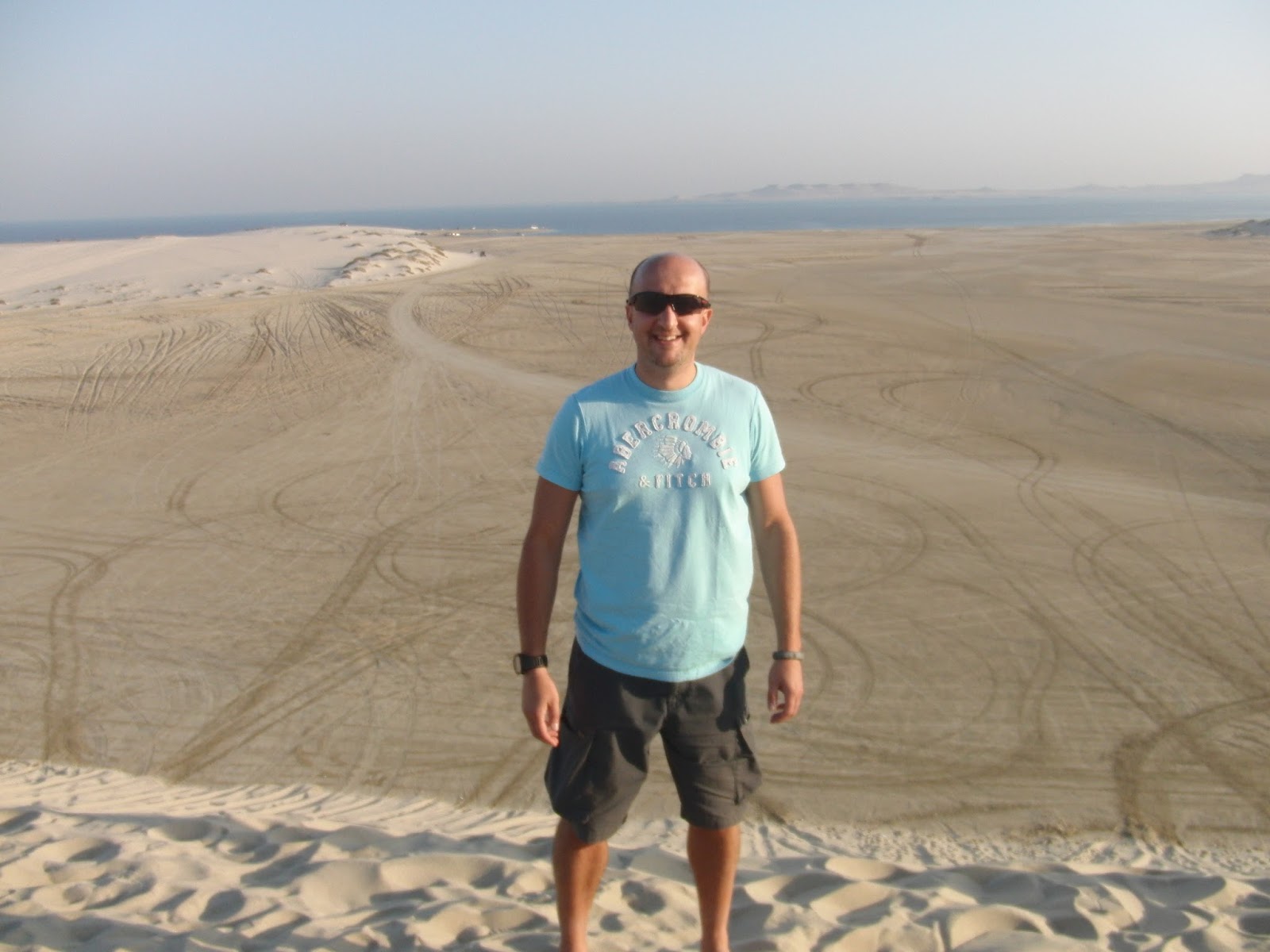
4 years in the desert

It is amazing how time goes so fast. Today I celebrate my fourth anniversary living in the desert and working at Aspire Academy in Doha. It is as hot as I found it getting out of the airport (40 degrees C today!) when I arrived from a much colder London. While it seems like yesterday, four years have gone by quickly and a lot has happened professionally and personally. This blog article is a bit of a mix. A reflection on my work here but also on my life here with my family.

So what has happened in the last 4 years?
Quite a lot actually. I have seen four graduations of Aspire athletes with some of our graduates progressing their sporting careers to international stardom and some continuing a healthy lifestyle and  careers in education/army/business. I have worked with the rest of the coaching and sports science team to support the development of many young athletes over the last four years in Doha and abroad.

Getting ready for the Gymasiade 2013 in Brasilia with Coach Carlos Cavalheiro (now head coach of Brazil Athletics), Abubaker Hayder (who won Gold in that even and competed in Rio 2016 last summer) and training partner Adam Mousab (which we hope to see in London this summer)

It is great to see these young men grow in our facilities with the mentoring and support of teachers, parents, coaches and support staff to reach their potential on the international stage. I have written previously about our graduates in Rio Olympics. But it is not all about athletics in Aspire. We have had some great results with the squash programme, with our graduate Abdulla Al-Tamimi climbing the World Ranking in the seniors in the top 40 and reaching the first senior semifinal at the Pittsburgh Open in March this year and the younger boys have reached the podium in international competitions very often.


Table Tennis has also produced some good results with our young athletes Mohamed Abdulwahab and Nawaf Al-Malki and Abdulaziz Mohd winning medals in international competitions.


Finally, we have a new programme in Fencing, and the first few months with the new coaching team in place have been quite exciting.


My department has been providing relentless support to all the athletes in the programme and some senior athletes from national federations on a daily basis with training monitoring, testing, project-based support and many other activities required to make sure each individual athletes has the best chance to get better. Over the last four years, thousands of hours of services have been provided and  gigabytes of data have been analysed, turned into reports and into interventions. The team has also produced 36 articles on peer reviewed journals, which is an incredible accomplishment, considering that we are not an academic institution and all staff has limited time to produce research papers. For me, it is important to apply scientific principles to the activities we conduct and also communicate via peer review publications our work to share knowledge and engage with peer review. Two of my team members joined us and then moved on to more senior opportunities and are doing very well in their new roles. Andrew Murray as a Director of Performance and Sports Science at the University of Oregon and and Thomas Jones as a senior lecturer in Northumbria University have contributed enormously to the activities and culture of the sports physiology unit in Aspire and are now making an impact in sport and research in other cultures/environments. Seeing former staff move to bigger responsibilities and succeed always makes me proud as I always try to support and develop keen and motivated individuals. New staff will join us soon and I am already looking forward to next season for some exciting new projects and activities to support Aspire's mission to become the World reference.

I have been fortunate to work with colleagues in other departments to organise 3 conferences. Two youth athletics coaching conferences (the last one is available here) and the #trainingload2016 conference (all talks available here and special issue of International Journal of Sports Physiology and Performance here) which will be for sure a major milestone in this scientific field for years to come. I was also involved in a big project during the Handball World Championships in Qatar 2015, developing a new analytical solution with Prozone for Handball and conducting a comprehensive study on the demands of elite men's handball with the scientific and medical commission of the World Championships. This was thanks to the vision of the organising committee, Aspetar hospital, and a fellow former handball player (albeit more successful than me with his Olympic Gold medal) Dr. Nebojsa Popovic, showing how great it is to work in a large campus (Aspire Zone) with amazing expertise and passion for learning and developing new knowledge.

Tracking camera ready before game 1 of Qatar 2015.


On a personal front it has been quite exciting too. I have taken on few new sports and I am enjoying a more active lifestyle since moving here.


I have managed to visit some pretty cool places here in Doha and in nearby countries and taken some nice pictures.


So, it's been a great 4 years after all.

Tuesday, 3 January 2017

2016 is gone, looking forward to a great 2017

I realised I have not written much on the blog for ages now and this is a good time to analyse the year just finished as well as looking a bit into 2017.
First of all, thanks to the 13,134 users who read the blog. It feels like a small town was curious about my writing and I want to thank everyone for the more than 72,000 page views.

Despite the fact that I am not terribly active on the Blog, "old" articles still seem to be of interest and hopefully in 2017 I will be able to write more.

This has been an incredibly positive year (oh well, a part from my knee injury). At work many things happened which were incredibly rewarding.

In February 2016, we held the first scientific conference dedicated to Training Load monitoring in Aspire. The conference was a big success also echoed by the #trainingload2016 and the twitter trending. All the talks are now available for free online and in the first few months of 2017 a special issue of the International Journal of Sports Physiology and Performance will be made available online (again for free) with all the papers and reviews from the conference.

Dr. Marco Cardinale (QAT) - Monitoring Athlete Training Loads - The Hows and Whys from Aspire Academy on Vimeo.


Training activities and at Aspire were in full swing and summer camps saw few of our young athletes get medals in Regional and Continental championships as well as qualifications to World Juniors in many sports.

In July our student/athlete Mohamed Ibrahim Moaaz coached by Ivica Jakeljic became World Junior Champion throwing his discus 63.63 meters. An incredible result considering his young age and a testament to the excellent coaching and support received at Aspire Academy since he joined.


In August, we had four former students qualified in Rio de Janeiro for the 2016 Olympics and they all did very well with Mutaz Barshim coming back to Qatar with an historical silver medal.


These were incredible results for a small country like Qatar and something to be really proud of. furthermore, these are very young athletes with great potential for the "home" World Championships in Doha 2019. For the first time in years I was away from the Olympic environment and I have to say I missed it, but it was great to support Qatar and also see how well my former colleagues did with Team GB and Team Italia.

The Olympics always give us incredible stories of athletes, coaches and support staff capable of doing amazing things. However, sadly, they also remind us of the dark side of sport with many doping stories, in particular the McLaren reports (1 and 2) from WADA.

In October I was invited to speak at the 50th anniversary of the Italian School of Sport at the Olympic Committee and it was great to see again so many familiar faces, but also remember former colleagues like the late Marcello Faina and my mentor Carmelo Bosco. I left Italy many years ago to pursue my career in sports science, and it is always special to be able to come back and hopefully inspire the younger generation of Italian Sports Scientists.

Thanks to work within my unit and collaborative efforts with other scientists, this has been a productive year from a scientific standpoint. First we published this work on Citrulline Malate conducted before the London 2012 games. Then this paper on Ischaemic Preconditioning, part of a series of studies conducted with colleagues in UCL before I left for Qatar. Work conducted in the lead up to London 2012 with Boxing and in the lead up to Sochi 2014 with Skeleton was also published. The first of the papers related to the Handball study conducted during a World Championship in Qatar was also published as well as the mini review from the talk I gave at the Training Load conference. In the last few weeks, we also received acceptance for a study conducted understanding practices and attitudes towards recovery in adolescent athletes in Asian and UK cohorts, and this work from Dr Pujari's PhD in Aberdeen on a novel vibration exercise device. Few papers are still under review or just accepted but not available online yet, so overall it has been a very productive year.

2017 looks already interesting. We have athletes competing in international competitions and trying to qualify for World Youth and Junior events in various sports. Some interesting scientific efforts are continued to understand more how to support better young athletes and I am due to speak to a super interesting conference on young athletes in Montreaux in September 2017. If you want to know more about this event just go on http://yaf2017.org, it is going to be a very interesting conference and I am looking forward to learn from many international colleagues as well as give my views.

So, au revoir 2016 and welcome 2017.


Thursday, 12 May 2016

New paper: Physical Predictors of Skeleton Performance

This week I had another paper published. This paper was part of the PhD studentship of Dr. Steffi Colyer in partnership with Bath University, GB Skeleton, UK Sport and my previous role at the BOA.

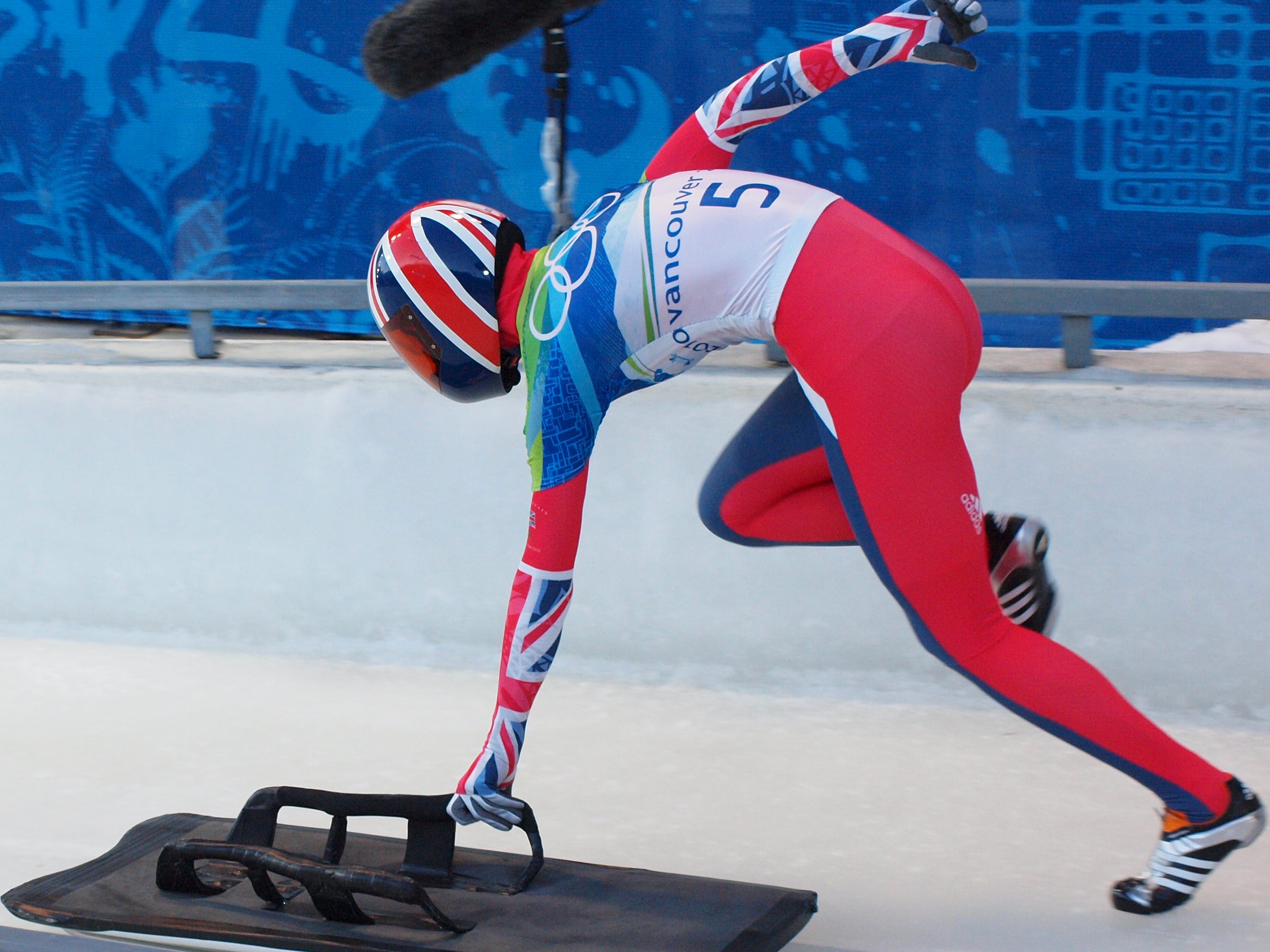
In this work we looked at the testing battery for strength and power assessment of bob skeleton athletes and identified predictors of skeleton performance. The analysis approach revealed that 3 tests scores can obtain a valid and stable prediction of bob skeleton start performance. More work from Dr Colyer's excellent PhD will be published soon, so follow her work as I am sure more applied approaches in other sports will be followed in the next years. I enjoyed working with a great group of colleagues, athletes and coaches for this project and the publication reminded me of how fortunate I was in my time in the UK.


This project is a good example of how some applied sports science projects can advance understanding of specific performance issues as well as provide meaningful advice for the coaches and practitioners involved in this particular sport.

The abstracts is below:


 2016 May 1. [Epub ahead of print]

Physical Predictors of Elite Skeleton Start Performance.

Abstract

PURPOSE: 

An extensive battery of physical tests is typically employed to evaluate athletic status and/or development often resulting in a multitude of output variables. We aimed to identify independent physical predictors of elite skeleton start performance overcoming the general problem of practitioners employing multiple tests with little knowledge of their predictive utility.

METHODS: 

Multiple two-day testing sessions were undertaken by 13 high-level skeleton athletes across a 24-week training season and consisted of flexibility, dry-land push-track, sprint, countermovement jump and leg press tests. To reduce the large number of output variables to independent factors, principal component analysis was conducted. The variable most strongly correlated to each component was entered into a stepwise multiple regression analysis and K-fold validation assessed model stability.

RESULTS: 

Principal component analysis revealed three components underlying the physical variables, which represented sprint ability, lower limb power and strength-power characteristics. Three variables, which represented these components (unresisted 15-m sprint time, 0-kg jump height and leg press force at peak power, respectively), significantly contributed (P < 0.01) to the prediction (R2 = 0.86, 1.52% standard error of estimate) of start performance (15-m sled velocity). Finally, the K-fold validation revealed the model to be stable (predicted vs. actual R2 = 0.77; 1.97% standard error of estimate).

CONCLUSIONS: 

Only three physical test scores were needed to obtain a valid and stable prediction of skeleton start ability. This method of isolating independent physical variables underlying performance could improve the validity and efficiency of athlete monitoring potentially benefitting sports scientists, coaches and athletes alike.
PMID:
 
27140284
 
[PubMed - as supplied by publisher]

Friday, 29 April 2016

#TrainingLoad16 Videos Now Online

All the videos of the #TrainingLoad16 conference organised in Doha by Aspire Academy's department of Sports Science are now online and free to access for everyone here.

The conference was a great success and showed how much work has been done in this field as well as how much we need to do in order to provide more and better tools to improve our decision making when planning training activities in different sports.

Below is the video of my talk.

Dr. Marco Cardinale (QAT) - Monitoring Athlete Training Loads - The Hows and Whys from Aspire Academy on Vimeo.


Friday, 4 March 2016

Training Load Conference In Aspire

Last week we held a fantastic conference at Aspire: "Monitoring Athlete Training Loads, the Hows and Whys". We had attendees from all over the World and a pretty amazing line up of speakers, so I considered it a privilege to be able to give an overview of my experiences to the audience in the company of pretty amazing sports scientists.

The opening keynote was provided by Professor Carl Foster who gave an excellent overview of this area starting from his initial papers describing the session RPE method ending to recent papers using mathematical models as well as some aspects about how he sees the future of this field.

3 days full of activities followed with invited speakers, young investigators and free papers. The invited speakers were:


  • Prof. Carl Foster (USA) 
  • Dr. Dave Martin (AUS) 
  • Dr. Stephen Seiler (NOR) 
  • Dr. Bill Sands (USA) 
  • Dr. Darren Burgess (AUS)
  • Prof. Martin Buchheit (FRA)
  • Dr. Marco Cardinale (QAT) 
  • Prof. Aaron Coutts (AUS)
  • Dr. Tim Gabbett (AUS)
  • Assoc. Prof. Inigo Mujika (ESP)
  • Prof. Warren Gregson (QAT) 
  • Dr. Alberto Mendes-Villanueva (QAT)
  • Dr. Michael Kellmann (GER)
  • Mr. Andrew Murray (QAT)
  • Mr. Rod Whiteley (QAT)
  • Dr. Jos J. de Koning (NED)
  • Dr. Matthew Varley (QAT


  • Training monitoring was discussed within various sporting contexts: individual sports, team sports, combat and acrobatic sports as well as technologies and psychometric tools, mathematical models and injury prevention.

    We will provide online access to all the talks of the conference soon on the Aspire Academy website (www.aspire.qa) and we have agreed to publish a special issue of the International Journal of Sports Physiology and Performance with all the papers from the conference and mini/extended reviews of this area to make sure that we can capture and disseminate all the knowledge exchanged and acquired over the 3 days.

    In summary there was a lot of talk about the simple use of session RPE and how it could be used not only to track training load in many sports but also how it can be used to assess the likelihood of injuries in some sporting groups. Many (myself included) raised some issues with using just this measure as it is strongly biased by training duration and does not provide enough information to be able to change the content of the training. All speakers tended to agree that training monitoring needs an holistic approach with various measures used also according to the sport analysed, and the concept of dose-response it is something we need to revisit as many individual training sessions are prescribed without understanding the responses such sessions trigger. New technologies were discussed in terms of their validity and reliability and it was clear that too many manufacturers are too keen to sell and not keen to make sure their products are valid and reliable as well as having mostly black box approaches in which it is impossible or very difficult to extract raw data for advanced analytical capabilities. Finally, there was a call for standardisation of data collections as even in simple tools like RPE various scales are used also in various languages and not validated which permeate the literature and man felt this makes it difficult to compare studies conducted in various countries. The translation aspect of other psychometric tools was highlighted by Prof. Kellman which clearly stated that literal translation may not be appropriate in some countries as specific terms (and therefore anchors used in psychometric tools) might have a completely different meaning in the sociocultural context in which they are translated from English. Definitively more work is needed to a true international standardisation of many psychometric tools and visual analog scales.

    My prezi is available here (no voice):


    The conference attracted a lot of interest in social media and was trending on Twitter every single day. I have collected the most significant tweets and reactions in a storify file to facilitate access and it is accessible below.


    Friday, 11 December 2015

    Reflections about coaching, strength and conditioning and the emergence of cargo cult science in sport

    I have been thinking long and hard about writing this blog. Mostly because time to put in words what I have been thinking about in the last few months has been lacking but also because I wanted to reflect about what I have been seeing in the last 12 months around the World and take stock.

    For the readers, I am not having a go at any particular individual and/or association/group of people, I am just writing about my worries and they way I see things going.

    Before getting into some details, it is important to understand where this reflection is coming from. It is coming from my personal career history, where I started and how my journey is going, and how things have changed during my journey.

    When I started this career in 1993, right after graduating with my first degree in Sports Science, I was mostly a coach with an interest in the scientific applications of strength and conditioning. I was fortunate enough to have met Professor Bruno Cacchi who was the Head Coach of Italian Athletics which setup the first laboratory to study strength training in Italy in the then ISEF of Rome. What I learnt in the 4-5 years I was in that lab was to develop an inquisitive approach to training. Prof Cacchi was the most famous Italian track and field coach at the time and I remember him telling me that he organised the lab so he could learn more about what he was doing as he had many questions about the activities he did with his athletes on track. So he wanted to measure as much as he could and simulate sessions he was doing to separate the wheat form the chaff. Equipment was very limited at the time, computers were running MsDos and Windows 3.1. Very few laptops were available and the state of the art for our testing activities was the biorobot (the early version of Muscle Lab) and photocells mounted everywhere (with very basic software). My coaching was mostly on the track and on handball courts and I was starting to provide strength and conditioning support to various sports. What Prof Cacchi always told me was: "if we want to understand what we do as coaches we have to have a training programme, we have to know what the athlete completes and we have to assess how they progress". This lesson still drives me today but somewhat it seems lost.


    This was taken in 1998 in Sportilia in a training camp with the Italian Handball NT

    Despite the enormous advancements of sports science and the subsequent professionalisation of sports science specialists, things do not seem to get much better. I still see enormous improvisation in the coaching community, with far too many people not having a programme and a structured approach to assessing what works and what does not work. There is still a lot of improvisation in too many places. Coaches turn up and do something, completely unstructured, with not much clarity and knowledge over the implications of their sessions and unclear ideas about progressions. In many cases, I see coaches picking "sessions" in random order and with limited control over loading. This is why I believe we see many injuries still. Injuries are too many times the result of inappropriate loading patterns which is a consequence of poor planning and/or inappropriate training choices.

    Scientific support in these cases is challenging, as most of the times it is only necessary to point out inadequacy of the training paradigms used. And there is no way sports scientists can help improving the quality of a training programme if there is no programme.

    The other worry is the proliferation of cargo-cult science in coaching communities. The Internet is now full of courses, podcasts, articles, online access to content. Information is now available anytime anywhere. But sadly there is also a proliferation of coaching courses offered by various entities in different part of the World of dubious quality. International and national federations do offer coaching courses which should have some form of quality control/assurance, but clearly the big bucks are in courses and activities offered by private institutions and/or individuals. While I am a strong believer that knowledge comes form anywhere and confining it to rigid structures can be counterproductive, I also believe that somehow somebody somewhere should guarantee quality of the message. 

    Well, in many instances I see a lot of pseudoscience and absolute rubbish being "sold" to coaches. Some of the terminology I hear makes no sense, and the mutterings of aerobic, anaerobic, power, force, CNS etc etc in random order really drives me insane. Not to mention the non existing definitions and /or observations and definitions that have no evidence and are totally non-sensical. If you have ever heard about "CNS session" you know what I mean. This is not a war on semantics, it is about making sure that the distribution of bullshit stops. Too many coaches are now convinced about things that do not exist and in an era of high speed cameras are still convinced they can see stuff that it is not there (I will call it the "Nessie Phenomenon" to pay tribute to the monster nobody can see in the North of Scotland). 

    Training Philosophies are now turning into religious-like beliefs (are you a "believer" and a follower of coach X method? ) and this is probably the consequence of too many coaches teaching other coaches such beliefs not supported by evidence or sold on the basis of some athlete winning some medal somewhere. What I have rarely experienced is a coach which lectures about what they do (for real!) without too much philosophy but with evidence of what is the programme, what they assess and when, what are the typical changes in whatever indicators they have during the seasons and what evidence they use to predict performances for their athletes as the season progresses. Instead of this, I sit in too many lectures in which I hear about philosophies, I listen to non-existing pseudo-science, and I see few pictures or videos of successful athletes. But no idea of the content (what did the coach do? How was the load progressed? How progress was assessed, how did the coach "teach" the athlete", what did the athlete learn etc etc.).

    The worrying aspect is when coaches are also encouraged to branch out to other professions providing therapy, nutritional advice, medical advice, interpretation of clinical examinations etc etc. This is unacceptable and dangerous. This is the reason why sometimes athletes may fail a doping test and/or might delay rehabilitation following an injury and/or develop an injury. Coaches should be great at coaching and teaching as well as creating positive environments for athletes to improve. Everything else should be left to specialists, people that know what they are doing. Having a coaching philosophy is for sure a good idea (anybody needs a vision/beliefs/ways of approaching a problem), but at the end of the day sport performance is brutally simple, it is in fact about getting better and trying to be better than others. 


    Philosophies seem to permeate the development of the strength and conditioning community as well. When I started, it was pretty clear to me that my job was to try to make people stronger, faster, more flexible, I was driven by writing content and assessing outcomes and trying to understand what worked and what didn't. In my view after having seen quite a few lectures/presentations from strength and conditioning specialists, I hear a lot about philosophies but I rarely see content and I mostly see poor or non-existing outcomes. I fear the scientific approach is gone (and for science I do not mean the one you do to write a paper, I mean systematic approaches to documenting what you do and measuring some outcomes). While I see all this, the era of Big Data is upon us. Everyone talks about it, but many are struggling to see where the big data are. To me the biggest data still missing are the ones related to training content, what is planned vs what is executed and how things progress. I am also interested in knowing about technical development, how we should teach things to athletes and we should assess if they develop technically. In the Athletics World you hear a lot about techniques and how coaches "see" technical errors in sessions and in competition. What I am stil struggling to find is evidence about how true are such errors and most of all how and if such errors can be corrected. This to me is the art of coaching, but we can now build the evidence for it and we should strive to understand this aspect more.


    Sports science is evolving, we have more devices, more information, more ideas. However we are still lacking easy, simple, non-invasive ways to understand more about the implications of single training sessions as well as the effectiveness of different training schemes. We have to still rely on invasive approaches in physiology and some of the approaches in other aspects of science are not practical in the real world (have you ever tried to play table tennis with an EEG cap and wires?). So this is where the biggest gains will come, in the ability to understand more what happens in the real world moving the labs on the field as much as possible.

    So this is my pledge, I will try to understand more, learn more and try to develop better ways to work in sport. My advice to you working as a coach, as a strength and conditioning specialist or as an "ologist" with athletes at any level is to avoid the "Nessie Phenomenon" and try to critically analyse any information coming your way. Do not accept what you hear or what others tell you. Go and find the information, try things yourself, try to assess what works and what not, document your experiences, reflect. Only in this way you will be able to separate the wheat from the chaff.

    We are exposed to B--sh-t every day, and there is science about it too, just read this paper and hopefully you can find a way to use appropriate filters.


    Monday, 2 November 2015

    From Protecting the Heart to Improving Athletic Performance - the Benefits of Local and Remote Ischaemic Preconditioning


    This review was also finally published. This is the second output of the last collaboration we setup with the Olympic Medical Institute before its closure. With colleagues from the Hatter Institute in UCL we started questioning the protocols employed in the clinical setting and in the sport setting for remote ischaemic preconditioning. Our first paper was a pilot study to look at the dose-response of common methods, this one is a comprehensive review on this topic with the hope that more and better studies are designed to define safe and effective protocols.
    The abstract is below, you can access the article online here.

     2015 Oct 19. [Epub ahead of print]

    From Protecting the Heart to Improving Athletic Performance - the Benefits of Local and Remote Ischaemic Preconditioning.

    Abstract

    Remote Ischemic Preconditioning (RIPC) is a non-invasive cardioprotective intervention that involves brief cycles of limb ischemia and reperfusion. This is typically delivered by inflating and deflating a blood pressure cuff on one or more limb(s) for several cycles, each inflation-deflation being 3-5 min in duration. RIPC has shown potential for protecting the heart and other organs from injury due to lethal ischemia and reperfusion injury, in a variety of clinical settings. The mechanisms underlying RIPC are under intense investigation but are just beginning to be deciphered. Emerging evidence suggests that RIPC has the potential to improve exercise performance, via both local and remote mechanisms. This review discusses the clinical studies that have investigated the role of RIPC in cardioprotection as well as those studying its applicability in improving athletic performance, while examining the potential mechanisms involved.

    KEYWORDS: 

    Acute kidney injury; CABG; Cardioprotection; Exercise performance; Ischemia-reperfusion injury; PCI; Perconditioning; Postconditioning; Remote ischemic preconditioning; Sports
    PMID:
     
    26477661
     
    [PubMed - as supplied by publisher]


    Tuesday, 20 October 2015

    New systematic review and meta-analysis


    I realised I have not written much on this blog since our activities started at Aspire Academy. This is clearly a sign that we have been very busy at work but also that the only time I had to write it has been spent writing scientific work. As a department we are doing very well not only because our service provision improves on a daily basis but also because we are starting to produce a lot of applied scientific papers which I hope can help the coaching and sports science community Worldwide in improving the support to athletes. We have quite a good number of articles already published, a few in press and many submitted which means that by the end of 2015 we might be able to make a significant contribution to our willingness to learn more and share the learning.

    The most recent effort is an extensive systematic review and meta-analysis on the topic of cold baths in adolescent athletes. This was triggered by the fact that many coaches and sports scientists working with young athletes tend to replicate processes and procedures observed in senior athletes without questioning appropriateness and effectiveness. Our conclusions are pretty clear: there is no evidence of benefits of such interventions in adolescent athletes and there are a lot of unanswered questions when it comes to the implications for such recovery practice to negatively affect training adaptations. So as usual, there is a need for more and better studies to understand this with all the limitations of conducting studies in a youth population.

    The article is free and completely accessible online. The abstract is below.
    If you are interested in reading it, just click here and download the PDF.

    Abstract

    Recovery and regeneration modalities have been developed empirically over the years to help and support training programmes aimed at maximizing athletic performance. Professional athletes undergo numerous training sessions, characterized by differing modalities of varying volumes and intensities, with the aim of physiological adaptation leading to improved performance. Scientific support to athletes focuses on improving the chances of a training programme producing the largest adaptive response. In competition it is mainly targeted at maximizing the chances of optimal performance and recovery when high performance levels are required repeatedly in quick succession (e.g. heats/finals). In recent years, a lot of emphasis has been put on recovery modalities. In particular, emphasis has been placed on the need to reduce the delayed onset of muscle soreness (DOMS) typically evident following training and competitive activities inducing a certain degree of muscle damage. One of the most used recovery modalities consists of cold-water immersion and/or ice/cold applications to muscles affected by DOMS. While the scientific literature has provided a rationale for such modalities to reduce pain in athletes and recreationally active adults, it is doubtful if this rationale is appropriate to aid training with adolescent athletes. In particular, since these methods have been suggested to potentially impair the muscle remodeling process leading to muscle hypertrophy. While this debate is still active in the literature, many coaches adopt such practices in youth populations, simply transferring what they see in elite sportspeople directly; without questioning the rationale, safety or effectiveness as well as the potential for such activity to reduce the adaptive potential of skeletal muscle remodeling in adolescent athletes. The aim of this review was to assess the current knowledge base on the use of ice/cold applications for recovery purposes in adolescent athletes in order to provide useful guidelines for sports scientists, medical practitioners, physiotherapists and coaches working with such populations as well as developing research questions for further research activities in this area. Based on the current evidence, it seems clear that evidence for acute benefits of such interventions are scarce and more work is needed to ascertain the physiological implications on a pre or peri-pubertal population.
    Keywords: 
    Recovery; Ice; Cold; Youth; Adolescent; Athlete; Elite

    Saturday, 29 August 2015

    New season new activities

    So, here we are again, after the summer break the new sporting season is about to start in Doha. The development of activities at Aspire academy is now moving faster than ever. We are starting an exciting project with the Qatar Athletics Federation to work closely together to develop talents as well as establish a sustainable structure to integrate coaching, science and medicine. Since September all QAF athletes and coaches will be training at Aspire and we will be working together to realize this vision and be ready for Doha 2019 and beyond. This project really excites me as I can see this being a true legacy project for the state of Qatar and I am proud to be part of it. We are also contributing to the international community with a conference, which has now become an annual event. In fact, after the success of last year’s conference we have organized another event on coaching young athletes with some excellent speakers and are looking forward to welcome all our coaches, and many coaches from around the World to attend as well. The details of the conference are available here. It is a very exciting time for the academy as two of our former students are participating in the World Championships in Beijing and one of them can hopefully bring home a medal (fingers crossed Mutaz and coach Stan!).


    Our service delivery to Aspire athletes and coaches keeps improving and we are introducing more detailed monitoring and reporting activities to be able to influence practice and document the coaching approaches being used in our sports. The centralized database has now been implemented and more minimally invasive and wearable technologies  are being developed and deployed to understand more about coaching young athletes. Our applied research activities are continuing and we plan to submit more papers to describe our work as well as challenge current practice on young athletes. I promise to use to blog to keep everyone up to date as well as working with Aspire to communicate through our social media/website channels a bit more about the activities we conduct.

    On the science front, we have also decided to make sure we have an annual scientific conference after the success of the Talent ID one we organized last year. This year our focus is on training monitoring and we have some amazing speakers confirmed as well as a great-exciting programme. The conference is completely free and all details are available here.

    This is a great opportunity to learn and network as well as a excellent chance to come to visit us, see our wonderful facilities and possibly talk about collaborations and/or bringing your athletes in Doha for training camps.


    So, as you can probably gather from my writing, I am looking forward to this sporting season and I hope to meet/see many of you in Doha at one of our events and/or at one of the many international competitions hosted by the state of Qatar.

    Popular Posts


    Followers