Showing posts with label Technology. Show all posts

Sunday, 26 February 2012

Motion trackers and lifestyle technology

I have been recently looking at various activity monitors and apps as I am developing an interest into stress related research and wellness. Most of the research published in this field in the last twenty years suffers in fact from lack of technology to quantify more aspects of wellness and physical activity. Original studies in this field had to rely on questionnaires (reported activity/sleep/food intake), but now with the development of small portable technology measurement opportunities have improved.

In the last few years I used mainly heart rate monitors, actigraphs, and the sensewear armband to look at activity patterns, energy expenditure and sleeping patterns of athletes.

One of the most interesting tools I have come across is the Jawbone bracelet and its iPhone® app.

Jawbone seems to be a true wellness device. In fact it is capable of tracking your activity, your sleep and your meals. The Jawbone band has a built-in precision motion sensor that automatically tracks your movement (steps, distance, calories burned, pace, intensity level and active vs inactive time ) and sleep (hours slept, time to fall asleep, light vs. deep sleep and sleep quality). No information is available on validity and reliability of its measurements, and at the moment I am not aware of any study published using it.  The reviews from various bloggers and magazines (see this one on Wired) have been positive. However I still have not managed to see one in action as it has been impossible to buy one online (perennially out of stock). If I can get hold of one, I promise I will write about it.

This seems to be potentially a great product for wellness and elite sport which can allow us to understand more about activity patterns, sleep and eating patterns of our athletes/clients. If it is precise and reliable.


Technorati Tags: ,

Sunday, 13 November 2011

Analysing Twitter trends

Twitter is a fascinating tool. It is nowadays one of the best social media when it comes to speed and availability of information. I have been using it for few months now and I am amazed by the information available on twitter as well as how easy it is to communicate and reach a wide audience.

Of course with so much information available on twitter it is now possible to analyse what people write and if there are any trends in the data.

Some online solutions are available to analyse twitter feeds. Trendistic is a popular choice.

I started with some simple analysis of pain and stress to see if there is any pattern. In the last 180 days there seems to be not much fluctuation and constant reference to these words.

image

The same here with weightloss and strength.

image

Curiously, analysing the keyword tired, it seems that people are mostly expressing their tiredness in the morning rather than in the afternoon/evening after a long day at work.

So, it seems that we can now analyse people’s behavior studying their tweets. I have few ideas for applications with athletes. Will keep you posted after some longitudinal work.

Sunday, 18 September 2011

Epidermal Electronics

I have been recently reading a lot about epidermal electronics. Pretty soon patients in hospitals (and sports people) should be able to wear skin mounted electrodes to be able to measure a variety of physiological indicators in real time for a prolonged period of time.

The latest innovation comes from the University of Illinois. A new device looking like a tattoo, has been developed and proposed as an innovative smart skin solution. Researchers at the University of Illinois who came up with this device made circuits with a wide array of components, to prove it could work: sensors, LEDs, transistors, radio frequency capacitors and wireless antennas. The devices can draw power from induction or even from mini solar cells!

Inventors say they could be used for various medical applications, especially sensors that monitor heart and muscle activity, which currently require conductive gels and/or relatively bulky equipment. To prove it, they measured electrical activity produced by the heart, brain, and skeletal muscles, some data are reported in Science.

image You can also see a video of the technology below. Pretty impressive technology which will be hopefully available soon!

This is impressive technology, pushing the boundaries of wearable sensors and providing incredible possibilities for studying human movement.

(Example of a sensor setup for EEG and other measurements. Photo courtesy of Prof. John Rogers)

(Easy removal of the skin mounted electrode. Photo courtesy of Prof. John Rogers)

You can learn more about this and other technologies developed by Professor Rogers’ group here.

Sunday, 11 September 2011

Muscle oxygenation in-vivo

Our paper on the possibility of using Near Infrared Spectroscopy (NIRS) to measure muscle oxygenation in-vivo in elite athletes has now been published ahead of print by Medicine and Science in Sports and Exercise.

This study is the first of a series of studies constituting the PhD studentship funded by the BOA to study the possibility of using NIRS in the field as a tool to understand performance demands and adaptations to training as well as developing innovative portable integrated brain and muscle devices. The research programme is a collaboration between ourselves, the University of Essex with Professor Chris Cooper and Professor Clare Elwell at University College London.

The main author of this work is Catherine Hesford and you can find more info and contact details here.

More work will be published in the next months and I will write more about this fascinating technique soon on this blog.

The abstracts is available below.

Med Sci Sports Exerc. 2011 Sep 3. [Epub ahead of print]

Asymmetry of Quadriceps Muscle Oxygenation During Elite Short-Track Speed Skating.

Hesford CM, Laing S, Cardinale M, Cooper CE.

Source

1 Department of Biological Sciences, University of Essex, UK; 2 British Olympic Medical Institute, University College London, UK; 3 University of Aberdeen, School of Medical Sciences, Aberdeen, Scotland (UK), 4 School of Sport, Health and Exercise Sciences, Bangor University, UK.

Abstract
PURPOSE:

It has been suggested that due to the low sitting position in short track speed skating, muscle blood flow is restricted, leading to decreases in tissue oxygenation. Therefore wearable wireless-enabled Near Infrared Spectroscopy (NIRS) technology was used to monitor changes in quadriceps muscle blood volume and oxygenation during 500m race simulation in short-track speed skaters.

METHODS:

6 elite skaters, all of Olympic standard (age = 23 ± 1.8 years, height 1.8 ± 0.1m, mass = 80.1 ± 5.7kg, mid-thigh skin fold thickness = 6.8 ± 2.2mm) were studied. Subjects completed a 500m race simulation time trial (TT). Whole body oxygen consumption was simultaneously measured with muscle oxygenation in right and left vastus lateralis as measured by NIRS.

RESULTS:

Mean time for race completion was 44.8 ± 0.4 s. VO peaked 20 s into the race. In contrast, muscle tissue oxygen saturation (TSI %) decreased, and plateaued after 8s. Linear regression analysis showed that right leg TSI% remained constant throughout the rest of the TT (slope value = 0.01), whereas left leg TSI% increased steadily (slope value = 0.16), leading to a significant asymmetry (p<0.05) in the final lap. Total muscle blood volume decreased equally in both legs at the start of the simulation. However, during the course of subsequent laps there was a strong asymmetry during cornering; when skaters travelled solely on the right leg there was a decrease in its muscle blood volume whereas an increase was seen in the left leg.

CONCLUSION:

NIRS was shown to be a viable tool for wireless monitoring of muscle oxygenation. The asymmetry in muscle desaturation observed on the two legs in short-track speed skating has implications for training and performance.

Monday, 11 April 2011

Microsoft gives Kinect starter kit for academic research

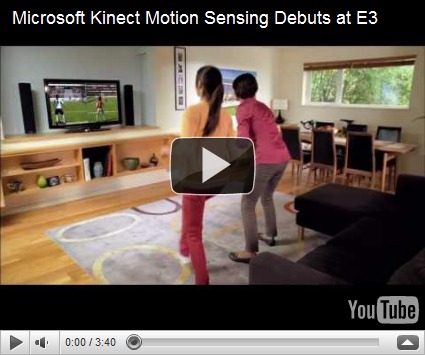
This is excellent news. Now scientist will be able to access a software development kit to develop innovative solutions for using Microsoft Kinect a new gaming device developed by Microsoft.

What is special about Kinect? Kinect allows a controller-free gaming. Which means full body play. Kinect responds to how you move as it is a motion sensing, optical device.

If you have never seen one, have a look at the video.


I predict a large number of new applications developed for sports and rehabilitation!

Sunday, 10 April 2011

Nanosensing and biochemistry

This is not really new…but it was new to me today when I found some articles on this innovative technology. I am talking about a nanosensor that could be injected into the skin, much like tattoo dye, to monitor an individual's gluclose level. As the glucose level increases, the dye would fluoresce under an infrared light.

The researchers at Draper Laboratory, in Cambridge (MA), have already tested a sodium-sensing version of the device in mice, and are due to begin animal tests of the glucose-specific sensor.

The material consists of 120-nanometer polymer beads coated with a biocompatible material. A patent application has been filed. Within each bead is a fluorescent dye and specialized sensor molecules, designed to detect specific chemicals (so far the work has been done on sodium and glucose).

When injected into the skin, the sensor molecule pulls the target chemical into the polymer from the interstitial fluid. To compensate for the newly acquired positive charge of a sodium ion, a dye molecule releases a positive ion, making the molecule fluoresce. The level of fluorescence increases with the concentration of the chemical target.  The range of concentrations that the sensor can detect can apparently be varied, depending on whether it is important to measure precise concentrations or more broad variability.

The sodium sensor has shown early success in animals. The researchers have developed a glucose sensor that works via a similar mechanism. It has been shown to work in a solution but has not yet been tested in animals.

Still, the researchers have a long way to go before the sensor is ready for human testing. However, if it works and it is accessible, this could be a good way to make a good use of a tattoo :-)


Tuesday, 12 October 2010

Monitoring training load: quo vadis? #2

After having presented a simple method to monitor training load without the need of expensive equipment, it is now the time to discuss other methods which involve the use of equipment.

The first and obvious one is monitoring training with the use of heart rate monitors. Thanks to the development of technology it is nowadays possible to measure in real time heart rate (HR) of numerous players on the field without the need for them to wear a watch or a recording device. Many companies in fact provide telemetry systems capable of storing and transmitting heart rate values recorded during training and/or competition. When I first started working in this field may years ago I remember the excitement of being able to measure HR during training and be able to download the files for analysis using the conventional heart rate bands and watches. The cost was prohibitive (there was no way I could afford 20 watches + HR bands!), it took ages to download the files with 1 interface connected to a serial port, and most of all, because athletes needed to wear a watch…we had to be creative about where to place it and also be prepared to sacrifice a few in some contact sports or due to falls.

Nowadays, it is very easy! The current systems can transmit information in real time, it is possible to measure many athletes at the same time and it is possible to store and analyse all data immediately after the end of each training session. Furthermore, due to the improved quality of the sensors used and the software and hardware developments, it is also possible to measure R-R intervals and analyse heart rate variability (HRV).


image

Heart rate can be considered as a reliable indicator of the physiological load both for immediate training monitoring and for post-training analysis in almost every sport. However, considering the influence of psychological components like anxiety and stress on HR, it is feasible to suggest that an appropriate assessment of training intensity should also consider this limitation of HR monitoring.

Typical training plans of team sports are characterised by a combination of technical and tactical specific drills, small sided games, or general types of team drills. In the above situations, all members or small groups of the team perform similar tasks. The determination of training intensity and training stress is an extremely important parameter for training planning and for appropriate distribution of training load in elite athletes competing in team sports.

The following methods have been suggested to be effective in quantifying the training load:

The Training Impulse [TRIMP] method

Proposed by Bannister et al. (1975), characterised by the following equation:

TRIMP = training time (minutes) x average heart rate (bpm).

For example, 30 minutes at 145 bpm. TRIMP = 30 x 145 = 4350

This approach is very simple, however it does not distinguish between different levels of training. So it has been used mainly to determine general load in aerobic-endurance sessions.

TRIMP TRAINING ZONES METHOD

Developed by Foster et al (2001)  is based on assigning a coefficient of intensity to five HR zones expressed as a % of HRmax:

1. 50-60% HRmax

2. 60-70% HRmax

3. 70-80% HRmax

4. 80-90% HRmax

5. 90-100% HRmax

The zone number is used to quantify training intensity; TRIMP is calculated as the cumulative total of time spent in each training zone.

For example

  • 30 minutes at 140 bpm. Max HR = 185 bpm. %max HR = 140/185 x 100 = 76%. Therefore, training intensity = 3.

TRIMP = training volume (time) x training intensity (HR zone) = 30 x 3 = 90.

  • 25 minutes at 180 bpm. Max HR = 185 bpm. %max HR = 97%.

Training intensity = 5. TRIMP = 25 x 5 = 125

The zone TRIMP calculation method can distinguish between training levels while remaining mathematically simple, however this can only quantify aerobic training and it does not allow quantification of strength, speed, anaerobic and technical sessions.

TRIMP Zones + RPE

Combining the two methods allows the determination of training intensity not only from a cardiovascular standpoint, but also taking into account the perception of effort and can be extended to strength training to be able to collect a cumulative training load score.

EPOC (excess post-exercise oxygen consumption) Methods

EPOC is basically the excess oxygen consumed during recovery from exercise as compared to resting oxygen consumption. The EPOC prediction method has been developed to provide a physiology-based measure for training load assessment.

EPOC is predicted only on the basis of heart rate derived information. The variables used in the estimation are current intensity (%VO2max) and duration of exercise (time between two sampling points, Dt) and EPOC in the previous sampling point. The model is able to predict the amount of EPOC at any given moment. No post-exercise measurement is needed. The model can be mathematically described as follows:

EPOC (t) = f(EPOC(t-1), exercise_intensity(t), Dt) (Saalasti, 2003)


At low exercise intensity (<30-40%VO2max), EPOC does not accumulate significantly after the initial increase at the beginning of exercise. At higher exercise intensities (>50%VO2max), EPOC accumulates continuously. The slope of accumulation gets steeper with increasing intensity.

(The following figure is from Firstbeat Technologies Withepaper)image

The relationship between measured and HR derived EPOC has been shown to be significantly large suggesting this method as an alternative solution to determine training load with minimally invasive procedures such as wearing a chest band (Rusko et al., 2003).

image

And by the same authors has been shown to be related to blood lactate.

image

The EPOC approach has been nowadays introduced by various HR monitors manufacturers (www.suunto.com and www.firstbeattechnologies.com).

(Figure above from www.suunto.com)

Various manufacturers are now developing innovative approaches to describe training loads based on HR measurements (e.g. http://www.polar.fi/en/b2b_products/team_sports/software/polar_team2_software) and more will be available soon due to the ability for the current systems to record with high accuracy also R-R intervals and derive training stress information from Heart Rate Variability indices.

I will write more on these in the next posts on this interesting topic…this is it for now…stay tuned!

Thursday, 24 June 2010

Light and wound healing

I recently came across a very interesting journal called “Recent Patents on Biomedical Engineering” to keep me up to date with recent development in this field and read a very interesting article on a new device which I would like to share with the readers of this blog.

This has nothing to do with training and athletic performance, however, considering that in contact sports unfortunately athletes do get injured and may suffer from wounds, I thought this could be something of interest for may of the readers.

The device in question is used to perform a form of therapy called Phototherapy. Phototherapy, the use of light for healing, has in recent years been a field of advanced multidisciplinary research. This modality has been shown to be beneficial in a wide and diverse array of maladies including the healing of chronic and acute wounds, as demonstrated in the use of laser light and LED (Light Emitting Diode) technology. Many in-vitro studies and animal models have shown the promising effects of phototherapy on wound healing. Human studies with laser light have demonstrated greater amounts of epithelialization for wound closure and stimulation of skin graft healing (Conlan MJ, Rapley JW, Cobb CM. Biostimulation of wound healing by low-energy laser irradiation. J Clin Periodont 1996; 23: 492-496; Whelan HT, Smits RL Jr, Buchman EV, et al. Effect of NASA light-emitting diode irradiation on wound healing. Clin Laser Med Surg 2001; 9: 105-14).

Visible and near IR light can be absorbed by cellular photosensitizers such as cytochromes and flavins/riboflavins . Absorption of light by these photosensitizers causes their excitation and relaxation by transferring electrons to O2, thereby generating reactive oxygen species (ROS). ROS are probably best known in biology for their ability to cause oxidative stress. They can damage DNA, cell membranes and cellular proteins and may lead to cell death. However, low ROS fluxes play an important role in the activation and control of many cellular processes, such as the release of transcription factors, gene expression, muscle contraction and cell growth (Rhee SG. Redox signaling: hydrogen peroxide as intracellular messenger. Exp Mol Med 1999; 31: 53-59). Therefore, it makes sense that an appropriate does of phototherapy could be beneficial for wound healing (and I would like also to add…if specific light wavelengths can be reach deep enough muscle healing?).

Various devices have been implemented in phototherapy, especially in wound healing. The most prevalent to date are low level lasers (~10mW/cm^2) and LEDs which typically produce low energy intensities (10-50 mW/cm^2) at a band width of around 10 nm. Broadband light emitting systems with visible-range and near IR only were neglected until recently due to the potential of broadband stimulators (400-800nm) to determine photobiostimulation.

In the paper presented by Lubart et al. (2008)  a new device consisting of a halogen lamp with appropriate filters for the UV and IR wavelengths, and emitting light only in the visible and near IR region, 400-800 nm was tested on diabetic patients and patients with chronic ulcers.The authors state that the ability to irradiate large areas is very important for wound-healing and for killing bacteria, in contradistinction to the narrow laser or LED beam. Another advantage is its low cost, which will enable patients to purchase it for home use.

The results are quite impressive (images from Recent Patents on Biomedical Engineering 2008, 1, 13-17):

image

.

Also, this light setup was capable of sensibly capable of eradicating bacteria on the wound.

Interesting field, I definitively need to read more about this as I am sure there are new ways to speed up tissue repair which may benefit athletes!

Tuesday, 22 June 2010

Implantable electronics and possible application in sports science

I have a keen interest in new technologies able to help us understand more about how the human body copes with various training methodologies. In  fact, I believe that in order to improve the quality of our training prescriptions we need to base them on data and be able to provide an evidence-based approach to athletic training. We have now access to sophisticated tools capable of measuring a lot of aspects of human performance, mainly related to the output of movement (e.g. power output, force, velocity). Portable and field biochemistry technology has improved massively, but still, a part from blood lactate, glucose and few other biomarkers, we are quite limited in the ability to measure a wide variety of biomarkers in-vivo.

I have recently read a very interesting article on Technology Review published by the MIT (I suggest everyone to read this interesting online magazine every once in a while). The article was about dissolvable devices for medical applications. Something which is likely to look like this in the future:

(From Technology Reviews MIT: Credit: Bryan Christie Design)

Tufts University biomedical engineer Dr. Fiorenzo Omenetto is using silk as the basis for implantable optical and electronic devices capable of measuring vital signs and blood biochemistry in real time in a continuous manner. This implantable electronics are based on silk which is a biodegradable material and it is capable of carrying light like optical glass. Silk can also serve as a mechanical support for arrays of electrically active devices, allowing them to be placed on biological tissues without causing irritation. Depending on how it's processed, silk can be made to break down inside the body almost instantly or to persist for years. And it can be used to store enzymes for a long time.

Dr. Omenetto’s group has published numerous scientific papers of this technique and they have also completed studies using animal model. In the next picture you can see an example of an implantable device used in an animal model (from Applied Physics Letters, 2009).

image

The following image is an example of how this silk implant is capable of being used as an optics device (from Nature Photonics, 2008).


image

Furthermore, experiments conducted applying the technique to feline brains has shown how sensitive the electrodes are and what are the possibilities of applying such techniques on living tissues (image below from Nature Materials, DOI 10:1038).image 

This technique offers incredible opportunities for medical applications, however we should not underestimate the power of using such devices to improve our understanding of human performance. I can see that in the near future we will be finally able to measure in real time how our body responds to a variety of exercise paradigms as well as nutritional interventions improving our understanding of human biology and giving us a better chance to prescribe exercise programmes.


Monday, 21 June 2010

iPhone application for strength testing and training

I have just received a link to a new promising application developed for iPhone/iPod touch capable of using the accelerometer housed in the smartphone to be able applied to barbells for strength testing and for monitoring strength training.

The application is called LIZA and is available here.

It seems clear from the screenshots that it is possible to record the power/load relationship and calculate also velocity of the barbell:

clip_image001

And it seems to also offer the ability to compare tests performed at different times:

clip_image001[5]

After testing is also capable of identifying maximum power and the load corresponding to maximum power output:

clip_image001[7]

A lot more info are also available in real time and as summary feedback to be stored and to be sent via email.

clip_image001[9]

A video of how it works is available here.

It seems a very promising tool for personal trainers as well as for Strength and Conditioning coaches. At the moment there is no information available on the validity and reliability of the power calculations and on the accuracy of the using the accelerometer housed in the iPhone/iTouch. I am sure soon we will see some validation papers on this tool considering the fact that the University of Udine is involved in its development. Also, 1RM is estimated from the load/velocity relationship.

Liza offers also a lite version. According to the website, the lite version allows to perform the half squat test, to view the resulting data and send them via email or twitter just like the standard version; it is not possible to get any graphic representation nor save any data. The lite version displays some advertising banners.

I don’t use iPhone/iTouch, so I suggest the readers to download this application and decide for themselves if it is something worth having. Considering the cost and the fact that you don’t need any extra device, I suggest this is something worthwhile trying for any professional interested in measuring the outcome of strength training programmes.


Wednesday, 21 April 2010

Withings Body Scale review

I have been recently trialling an interesting new device: a Wi-fi scale. Absolutely brilliant concept: a scale which can transmit data via wireless connection to a server and have data available online via a web application or an iphone application.

After contacting the producer, I received the parcel and have been using the scale for a week and I am very pleased with it. Here is how it looks:


withingsIt has a very nice design with a durable tempered glass slab and a large backlit graphic screen. It is battery powered and very easy to use as it automatically turns on when you stand on it and it turns off within few seconds of inactivity.

It arrived in a nice small package of a total weight of 2.5 kg!

Setting it up

The scale comes with a manual in many languages, batteries and a USB cable to connect it to a PC for the initial setup. The initial setup requires downloading a software to set the scale up in your home or work network in order to be able to send the data to the web server. The process is simple, however my scale took few trials to be recognised as it filed to be connected to my home wi-fi. However after updating the firmware it all worked nicely, scale recognised and ready to go.

There is a very useful forum on the website of the company with a lot of up to date hints to solve every possible problem. Also, looking at the frequency of posts on the forum it seems that the support is quite efficient.

CIMG3185

Specs

All the specifications are indicated here, however the most important ones are:

- The ability to decide the unit of measurement

- The possibility to have body composition and BMI analysis

- Personalised multi-user monitoring

- Software for data sharing and analysis

Graduation 0.1 kg and maximum weight 180 kg


CIMG3183

Body Composition Measurements

The website does not specify how body composition is measured (in terms of what equations, how accurate and how valid such measurements are). I assume it is through bioelectrical impedance analysis. However it would be useful to have such data as accuracy of such measurements is crucial for its use in an athletic population. Also, I believe the normative data included in the software refer to the general population hence having very heavy muscular athletes might result in some high scores in BMI.

Software

The software is very simple, user friendly and is also available as an iphone application. The screens are user friendly and you can manually input data as well as add comments and delete data. It is very useful to track how your body mass is changing and keep records (sadly it informs you that it is about time you start dieting and exercise more!)

image

The software allows you to share the information and/or to print /save reports

image


Support, news and other useful stuff

Withings has a very useful Blog which is an incredible source of update for accessory software needs and anything specific to the Withings scale. They have recently developed a widget for Mac users, included their platform within GYMTECHNIK, and most of all, connected the scale to Microsoft Health Vault (Very interesting product of which I promise to write something about very soon).

The scale unfortunately supports only up to 8 users, which means is perfect for a family, but a bit challenging if you are a professional working within the fitness industry with many clients and/or with elite athletes and squads. However I am sure that some customised hardware and software solutions will be available soon for such demands.

Verdict

All in all a great tool with a lot of potential to be used with athletes travelling on training camps and facilitate the storage and recording of data where there is a wi-fi connection. Absolutely a great tool for a family as it allows to track everyone’s body weight very efficiently. More information on its accuracy and on the validity and reliability of the body fat measurements is warranted before recommending it to a group of elite athletes.

Sunday, 31 January 2010

Vancouver 2010

Technorati Tags: ,

The Olympic Winter Games are starting in few days and athletes are finalising their preparations for Vancouver. I will be there with Team GB in my second Olympic Game after the exciting Beijing Olympics. In the last 3 years we have spent a lot of time helping and supporting our winter sports athletes to help them prepare in the best possible way for Vancouver. We are not alone of course. Many countries are investing large sums to gain edges in all areas of preparation. Winter sports rely a lot on a variety of equipment for training and competition and in the race for success scientists from all over the World are looking at innovative technologies to give an edge to their athletes. Team Canada has set the target to finish first in the medal table at their home games and to accomplish this dream has invested $ 8 millions in a programme with 55 top secret projects. Strangely enough, despite naming the project “Top Secret”, the Canadians are adamant to talk about it. Of course they are proud of the wonderful job which has been done and are not afraid to talk about it.

Top Secret had two components. One dealt with the hardware of boots, skis, skates, poles, helmets and suits. The other focused on human physiology. In particular, a lot of work has been apparently done on recovery modalities.

We have done our work as well and hope to create few upsets in Canada. Preparation and travel plans are the first priority as our athletes will be competing in another continent. So plans to cope with jet lag and speed up adjustment to the new time zone have been put in place as well as recovery strategies to reduce the effects of sitting on a plane for hours. We have organised holding camps in Calgary and Lake Placid to provide our athletes with the best environment to prepare for the games. Science and technology projects have been conducted with various sports on equipment development, innovative training, preparation strategies and recovery modalities in partnership with our colleagues at UK Sport and at the Scottish and English Institutes of Sport. Last but not least a great partnership with Adidas means we could provide our athletes with innovative clothing solutions.

You can see what Team GB athletes think of our kit here:

So, we have our own cards to play and are looking forward to the next few weeks.

Recovery seems to be an hot issue and every country is looking at optimising recovery strategies for athletes competing over few days during the Olympics. Competition preparation and recovery are possibly the key areas where significant gains can be obtained. Physical and technological preparation is carried out for 4 years, but it is the little detail in the last few days which can make a significant difference for athletes on the big day.

Little details like what they drink, what they eat before their competition, the timing of food and special drinks intake, how they warm up, and most of all in what physical and mental state they are when standing on the start line. Of course technology plays a big role, equipment can make a difference, but the winner is always the athlete as no equipment can win on its own!

Tuesday, 29 December 2009

Linear encoder systems: A new kid on the block

In the last few years I have seen many companies develop linear encoder and accelerometry-based systems to measure power output during weightlifting exercises. This is mostly due to the fact that linear encoders and accelerometers are becoming relatively cheap and it is getting easier to write appropriate software routines to perform all measurements.

I have been using for one year the SmartCoach and I am very pleased with what i have seen so far. I have used it mainly for testing purposes and to analyse training sessions and testing sessions performed by strength and conditioning coaches around the country with the remote coaching modality.

The software is simple, easy to use and starts with a very good diary/scheduling system which allows the production of nice training schedules which can be sent to athletes and coaches.

Remote coaching is a great function as it allows a remote coach to write a session or check the content and execution not only in terms of sets/reps/external load but also in terms of power output per repetition.

It really works very well!


The software engineers have recently developed new routines to allow the users to perform strength testing and graphically present the Force/Velocity and Power/Velocity relationships to allow the determination of various parameters useful for strength training prescription.

I am pleased with this product and I recommend anyone interested in visiting the website to download the software for free!

Saturday, 26 December 2009

Praising the invention of E-book readers

I have just opened my Christmas presents and found an incredible new gadget: a PRS-600 Sony Touch e-book reader.

What a brilliant tool! After a quick installation of the software, I downloaded many free books on the device and a lot of PDFs from my library of scientific papers.

This is a fantastic tool. You can in fact take with you your full library of books and articles everywhere in the World, read your materials anytime anywhere and also add notes, comments and scribble on the files just like you would do on the paper version.

I am sure this gadget will save few trees and will massively reduce my printing output in the years to come!

Monday, 22 June 2009

Free video analysis software - KINOVEA


I have recently downloaded the latest version of Kinovea, a freeware video analysis tool. The new version allows all sorts of analyses to be performed using this very simple freeware software. The beauty of the software is the fact that is free and is of very good quality. I think it is a great coaching tool and with some minimal equipment can be extremely useful to share analysis of sports techniques between practitioners and coaches.

Kinovea can be dowloaded here.

Tuesday, 23 December 2008

iPOD/iPhone and sports science software

apple-iphone-in-hand-thumbElectronics manufacturer Apple Inc. is developing some software and hardware products aimed at the fitness and sports science market.

I was performing a simple patent search on Google Patents with iPOD and Fitness as keywords and came across a series of interesting patents filed by Apple.

The patent (US 2008/0077620 A1) shows also some screen shots of the software and the hardware is presented in other patents filed by Apple in 2007.

image

image

image image imageApple Fitness Companion

So, how long before we will be seeing tools for sports scientists and fitness instructors on the market able to be interfaced with Apple devices? Not very long. Apple in fact released the SDKs (software development kits) few months ago and I am sure a lot of people are working hard to deliver some apple-based solutions for sports scientists. The lifestyle companion system (this is the name of the patent) will allow also the possibility of setting specific goals, tracking progress and sharing information with an internet-based community.

I am looking forward to see it in action!

Friday, 19 December 2008

Free GPS tracking for Nokia Mobile Phones

NokiaN95

The internet is an incredible source of free resources also for sports scientists. I am a happy owner of a Nokia N95 8 Gig Mobile Phone. One of the features of this mobile phone is an internal GPS with aGPS support. The smartphone runs the operating system Symbian S60 3.1.

Nokia offers a lot of free software packages for the smartphone. One of the most useful tools I installed few months ago is Nokia Sports Tracker. Nokia Sports Tracker is a GPS-based activity tracker that runs on Nokia smartphones. Information such as speed, distance and time are automatically stored in a training diary. Supported Nokia Models are available here.

Ideally an athlete can just wear the mobile phone and perform the training session planned and record all data. This software can be used not only with Mobile phones with an integrated GPS but also with the ones with the possibility of using a Bluetooth GPS device. Nokia of course provides also some options for GPS receivers.

The software is great. With simple downloads directly from the Mobile it is possible to view all details of the activities performed and tracked and analyse all data and also map them.

image

Single workouts can then be viewed with a Map and specific details:

image

image

And, most of all, speed and altitude data are presented in graphic form:

Last but not least, it is possible to download the workout as a KML file and import it on Google Earth to visualise the route on satellite-generated maps.

The software can be also run entirely from the mobile phone with real time information:

The integrated camera in most Nokia phones will also allow to associate pictures with GPS data, so when the info is downloaded key pictures can be visualised and associated to GPS data. If you want to find out more about this, specific information on how to combine the two features are described very well on Jennifer Hanen’s blog.

This is a fantastic tool, I have used it in various locations around the World and it works extremely well. So, if you have a Nokia Mobile compatible with Sports Tracker make sure you start making good use of your GPS!

Popular Posts


Followers